Elena Rubashevskaja *
Kurdistan is a geo-cultural region divided between Iraq, Iran, Turkey, and Syria, with a significant diaspora of Kurds based in Europe. United by the strong sense of national identity, Kurdish people find themselves in very different political, socio-economic, and cultural circumstances. Every journalist attempting to cover the Kurdish POV ends up in a difficult position as each statement should be double thought through so as not to provoke authorities of the countries Kurdistan is divided between, and at the same time, highlight the diverse perspectives of Kurdish people.
Though navigating through politics has evidently become a part of the film critic’s job these days, the focus of my interest in Duhok was defined early on after I started researching the festival and its history. On every picture and video posted on the festival’s social media, there were men. A lot of men. Hall full of men, men on stage, men on the red carpet, men at press conference… Women were very few, and most of them were international guests. I couldn’t help but assume that the situation on screen would not be very different and that I had to analyze female representation in modern Kurdish cinema. As I was a juror for national features, this was going to be a great opportunity for investigation.
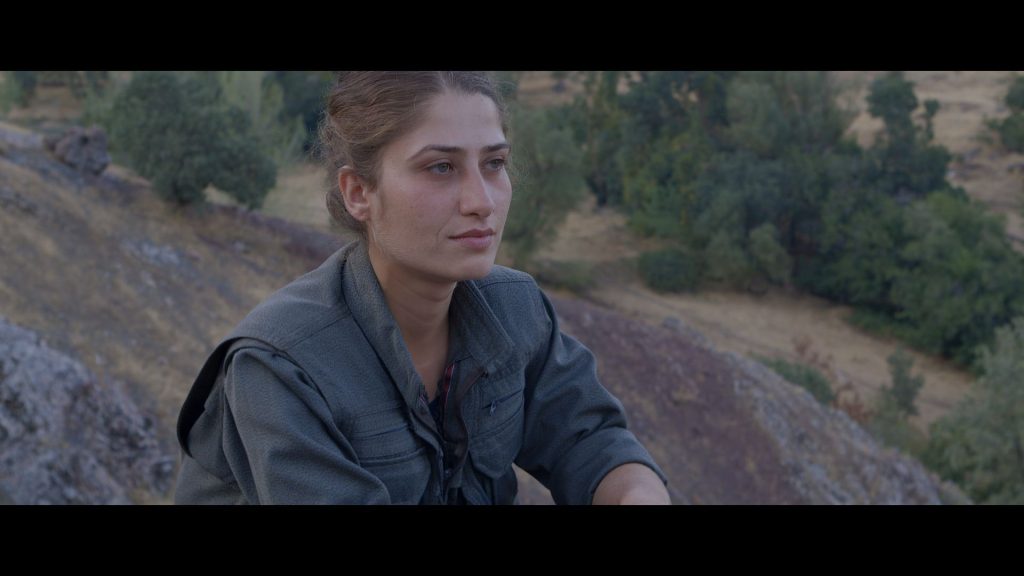
Upon receiving the program, I discovered that 6 of 8 films were directed by men, with only two female directors in the competition (both based in the EU). Yet it was but a start. To analyze anything, one has to have the presence of that thing in the first place, however, what I faced was almost the full absence of female characters in the films! In a world owned by men, women barely had any space and virtually no voice, acting as mere decoration for the men’s lives and stories. Only in two films (aforementioned works by Kurdish female directors based in Europe), were women chosen as protagonists.
The disturbing situation in cinema is but a reflection of the reality. Despite the festival taking the best care of international guests, it was hard for us to ignore the fact that women were practically not visible in public spaces, as well as few among the festival team. Another curious observation was the way traditional female Kurdish dress was fashioned. For the closing ceremony, I decided to wear one and was taken aback when told that long sleeves should be tied down behind my back, thus restricting my moves. Truly unique design, yet too clear of a message!
Read more