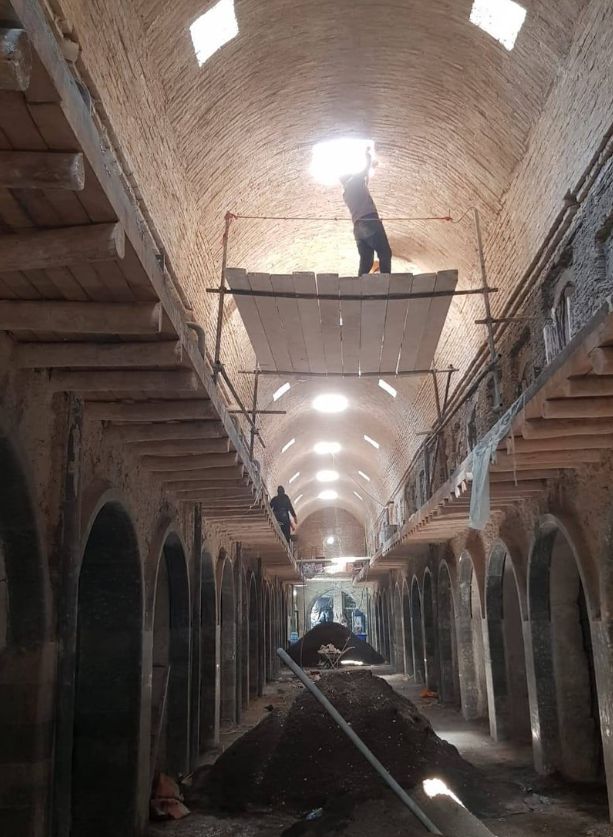
Bazarkurdistan – Renovations at Erbil’s historic Qaysari Bazaar were completed on Wednesday, allowing shop owners to reclaim their businesses after a fire last year caused significant damage.
“Work on both the new and archaeological sections of the Qaysari Bazaar, which includes a total of 270 shops, has been completed,” Sangar Mohammed, the supervisor of the renovation process, told Rudaw. He noted that only aesthetic changes remain, which will be undertaken by the shop owners.
On May 5, 2024, a fire destroyed 227 shops and seven warehouses, leading to a large-scale restoration project funded by the Erbil Governorate with 5.3 billion Iraqi dinars (approximately $3.6 million). As of January, 105 shops had been fully restored, while the remaining businesses are in the final stages of reconstruction. Authorities have focused not only on rebuilding but also on preserving the architectural character of the historic market.
The Qaysari Bazaar fire was one of several major market blazes in Erbil last year, all resulting in significant financial losses. On February 27, 2024, a fire at Langa Market destroyed 185 shops, with estimated losses of 6.75 billion dinars ($5.15 million). Two months later, another fire engulfed the same market.
In September, Governor Omed Khoshnaw announced that the Kurdistan Regional Government (KRG) had begun the process of compensating those affected by the fire, with compensation amounts ranging from 2.5 million to 20 million Iraqi dinars ($1,890 to $15,200).
“Today, all shop owners can return their goods to their shops and resume work,” Mohammed said.
He emphasized that the historical section of the bazaar, where the walls are made of mudbrick, “has not been modified but has been renovated in the same manner.” However, everything in the new section of the market has been fully renovated.
Erbil (Kurdish: Hawler) features an extensive Qaysari located just south of the citadel in the town center, established in the early 13th century AD. The Qaysari is accessed through numerous surrounding alleys. Once inside, shoppers navigate a maze of narrow paths between shops under a roof of corrugated metal. Most alleys showcase unique products predominantly sold by local vendors. The northeast corner of the Qaysari features a north-south alley that offers honey and dairy products such as yogurt and cheeses. Many shops provide Chai Kurdi (Kurdish tea) as a complimentary drink, benefiting from local tea vendors in the bazaar. Business thrives prior to festivities such as Newroz (Kurdish New Year), drawing larger crowds and customers.